Table des matières
Custome’s needs is always the first driving force and is placed at the core during the developments of industry. Especially for the LED display industry that every customer may have different requirements and new requirements keep coming up. The developments of the LED Display industry follow the pattern of below.
Customer needs->New technology appears -> New product developed ->New Customer needs, and this circle goes on and on to build and the shape the led display industry as what it is today.
Below is some Technology Milestone in LED Display Industry, each technology developed has upgrade the led display’s performance or cost with great scale.
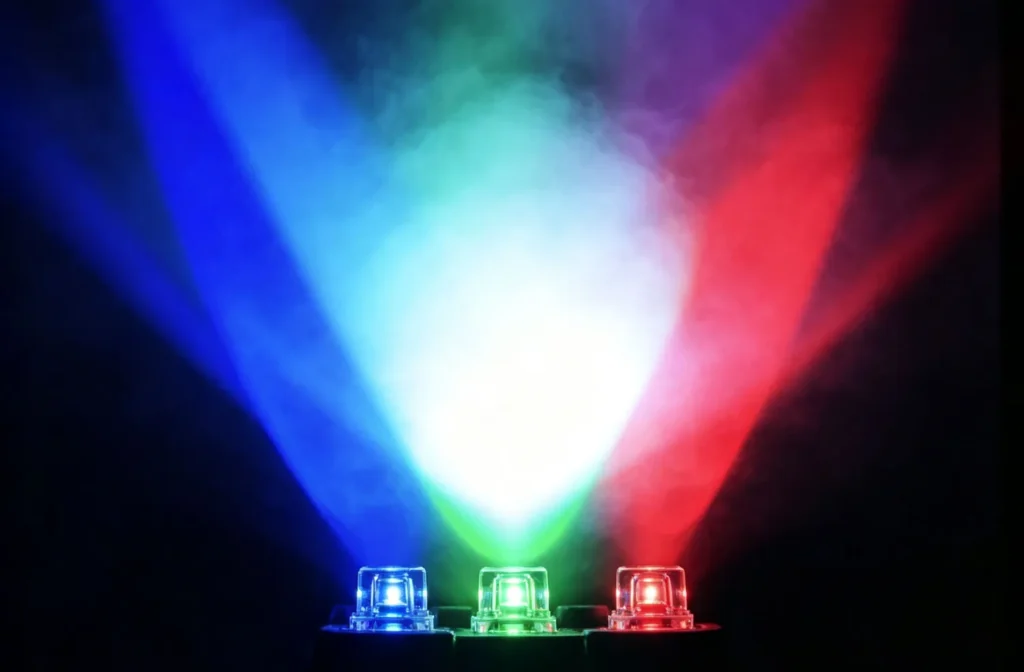
1: Blue led lamp came into the market at around 1993, and full color led display made possible
Since the appearance of the led lamp, people has started to use led lamp in display, while before Bule led lamp show up, people can only make single color led display or double color led display (which is good to display Text content informations). Though double color led display can also make people think that we are viewing a full color led display as the lack of blue light makes only makes the color warmer and little yellow.
With the Blue led lamp comes to market, now with the Red, Green, and Blue led lamp, with different color light mixing, it can show different colors. And this makes the led display is able to show colorful content. ( though the Greyscale at the time is quite low). Who invented the first full led display is a mistery now, while the first batch full color led display start to appear at around 1995 or 1996, For example QS tech in China installed China’s first Full color LED display in 1996.
The LED Display develops very fast, it did not take long to fully take over “JumboTron (a popular big video wall solution during 80s -90s which is using CRT technology as displaying technology”) ‘s market share. And now “JumboTron” is also in the form of LED Display.
2: Integrated SMD package came into Market at 2002, and indoor led display become possible
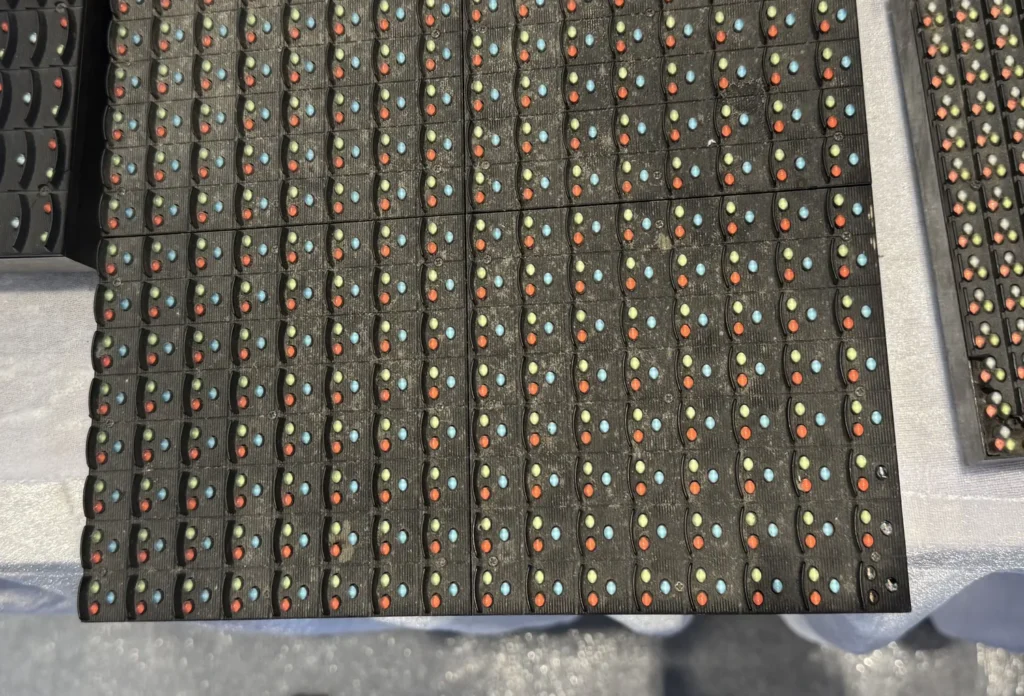
Around 2002, RGB 3 in 1 SMD package led lamp come to the market (Nationstar), The package size is 5mm width and 5mm length. Before the SMD led lamp, led display is using DIP led lamp which means each pixel need 3 led lamp, and this has limited the pixel pitch of the led lamp. The popular pixel pitch at that time was 37.5mm, 50mm, 100mm or even bigger, and as the main application of the led display at that time was outdoor billboard, big concert, as the viewing distance is far, hence the pixel pitch is not a big problem. But when try to use it indoor, due to the shorter viewing distance, it need smaller pixel pitch. And the SMD package at the time made it possible by making pixel pitch 12.5mm, 7.25mm which makes indoor viewing possible. And now SMD led display is still the main stream technology in led display usage. ( Now COB technology is about to take over its place)
3: PMW Driver IC came into market at around 2006, and high greyscale led display become possible
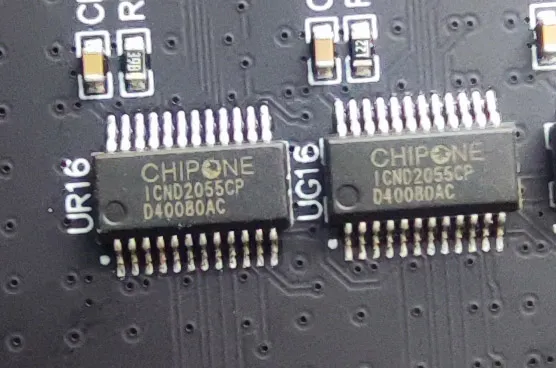
The Current-Brightness relation of the led lamp is not linear, to get different color, we need the R,G,B led lamp to have different brightness, and different brightness need the Driver IC to give different time duration current. Before the PMW Driver IC, the led display used to have lower greyscale, and lower refresh rate. Macroblock developed the first PWM Driver IC in 2006, and it has 16bit data which makes it possible to deliver 16bit greyscale. Some people may ask why we need 16bit greyscale, while our displaying content source is only 8bit. You can check this article to find out more information: Why we need 16bit or higher greyscale in led display?

4: Multi-time Driver IC into market at around 2008, and smaller pixel pitch led display become possible
It is known that the market is in need of smaller pixel pitch led display, as the smaller the pixel pitch, the higher resolution the led display would have and the more details the led display can show to the customer. While at the time, the big pixel pitch led display business is still very hot, and the price of the smaller pixel pitch led display goes by square the pitch ratio. As for example,
And it also have another problem, that the PCB board does not have enough space to place the Drive IC, and then the multi-time Driver IC has come into the market. By using the Multi-scan Driver IC, it can save the IC qty, not only did it save cost, but also make the layout of the IC on the PCB board possible ( of course, latter the Driver IC also have develop QFN package which takes up less space than SSOP package)
5: Small pixel pitch led display come into market at 2010
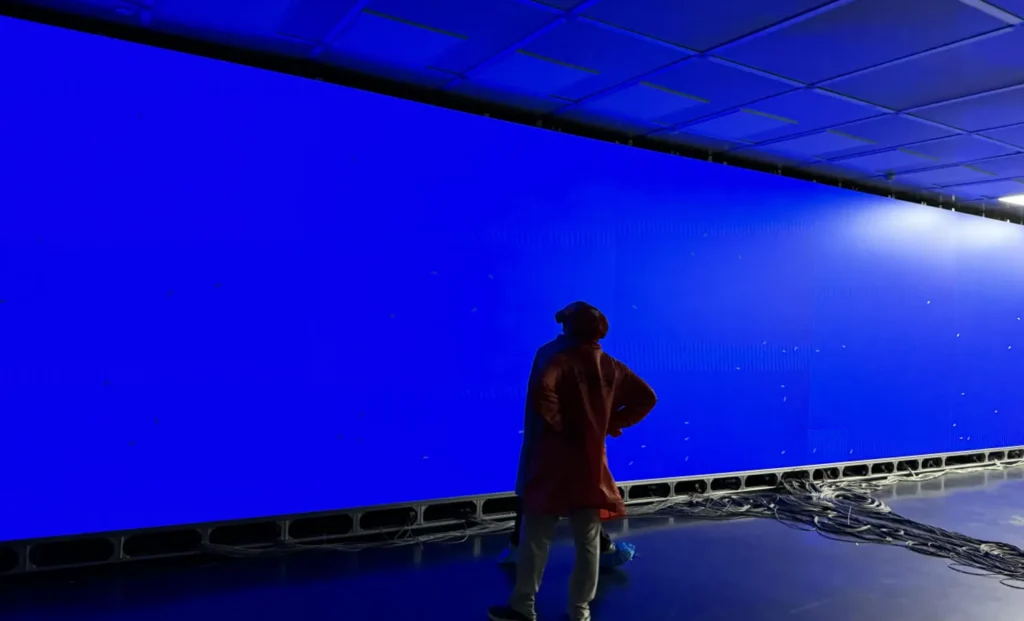
The market is full of pixel pitch between 6mm -50mm led display product before 2010, and pixel pitch 12.5mm and 37.25mm are kind of the main stream product for stage backdrop. The market do have a vibe that in the future smaller pixel pitch would dominate the market, While at the time, It faced too many problems, like smaller size LED lamp, Multi-time Driver IC, and the high cost. Leyard made the world’s first pixel pitch 2.5mm led display, and named it small pixel pitch led display. And since that time, A new category of led display was born. We call the pixel pitch less than 2.5mm led display a small pixel pitch led display.
At the time, the first small pixel pitch’s price would easily cost 30,000USD/sqm, And now smaller pixel pitch has dominated the market, and the main steam of the small pixel pitch led display has become pixel pitch 1.25mm. And the price also have dropped like 10times. Which makes the popularity usage of the led display possible. Now Micro LED display is in the same path that small pixel pitch led display did.
6: LED Display calibration technology into market at around 2010, Better visual effect makes possible
When the pixel pitch becomes smaller, it means that more LED Lamps (pixels) would be used, and higher resolution it would be. With the LED lamps’ quantities goes up, and distance between led lamps become short, the consistency of the led lamp becomes a important factor that affect the visual effect of the led display.
Though the led display’s led lamp are all from the same batch, but different led lamp would have slightly difference in color (wavelength) and brightness specs for the Red, Green and Blue lamp. The difference is not that obvious when the distance between the led lamps are big (pixel pitch is big), But the pixel pitch below 2.5mm, the difference would become hard to neglect. Then Calibration technology comes to market.
The theory of the Calibration technology is as below.
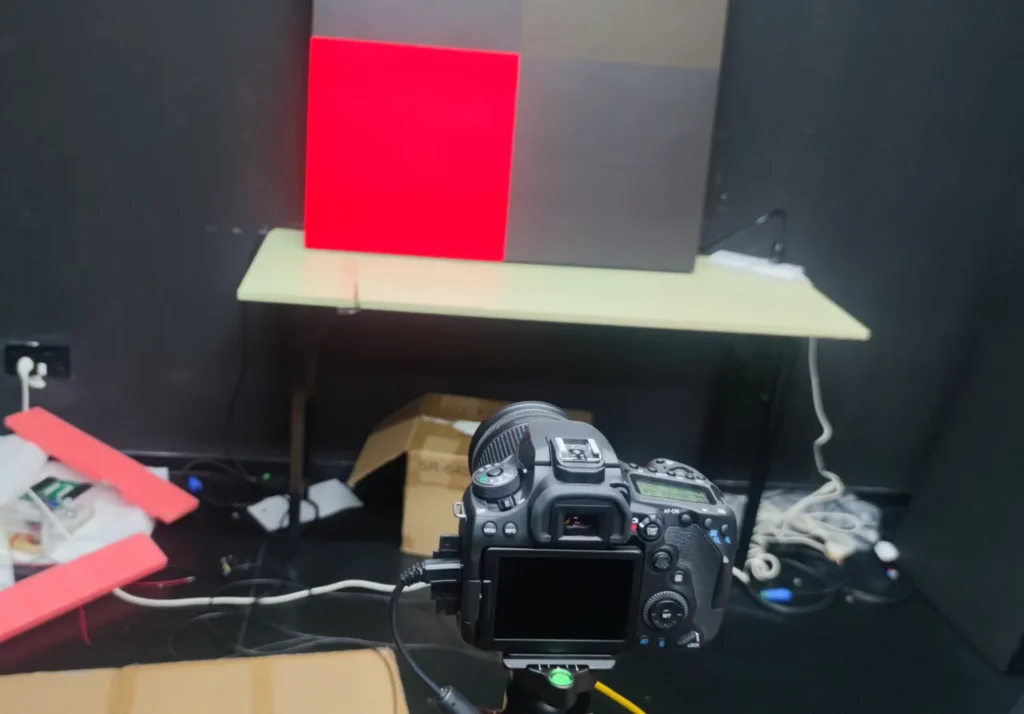
1: It use a camera to capture the brightness of all the led lamps (red, green, blue)
2: Its software would know the highest brightness a nit, and lowest brightness b nit. then it generate a correction factor for all the led lamp to be able to perform 80% * b nit. ( this correction factor can change current of the led lamp)
3:Then for all the led lamps (Red, Green, Blue) it would have correction factors, that makes all the led lamp to give brightness 80% *b nit. Then this led screen’s brightness consistency would become good.
And this is the calibration process. And from above, we would also know that after the calibration, the brightness would the led display would become lower. Normally the calibration correction factor is stored in Receiving card.
7: Common cathode led display come into market at 2010
For the outdoor led display, in order to make it readable under sunlight expose, then the led display need to operate with a high brightness over 6000nit. Heat dissipation and energy cost is always a big problem for outdoor led display. It is normally that we see the outdoor led display need to use a air condition system to cool it down.
While at 2010, silicon-core has introduce a game changing technology- Common cathode technology that not only reduce the heat, but also reduce the electrical bill. The theory of the Common cathode is as below:
1: Red led lamp’s power voltage is 2.6V, while Green and Blue led lamp’s power voltage is 3.6V. While in common anode technology, all the led lamp are power with the same voltage like 4.8V.
2: In common cathode technology, it would power the red lamp using 2.8V, and power Green and Blue led lamp using 3.8V. This means that for the common cathode technology, it need to have two different voltage input power supplier.
3:Say the common cathode and common anode is in the same brightness level which means the current that run through the led lamp is same. We would know that the wattage ration between common cathode and common anode is as below:
Common cathode/common anode = (2.8I + 2*3.8I)/(4.8*3*I) = 0.722
Which means that the common cathode can save around 1-0.722=27.8% energy
And less power consumed, also means less heat would generate.

8: COB technology come into market at 2019, mini led display and micro led display possible
Since the debut of the small pixel pitch led display, all manufacturer are all invest in small pixel pitch led display, and the pixel pitch become smaller and smaller. It reached a bottle neck when the pixel pitch near 1.25mm
When the pixel pitch become smaller and smaller, it becomes hard to make SMD package, now the smallest SMD package led lamp is size 1mm, and it is using CHIP structure. And when the package size become smaller, it also means the connecting pad become smaller, which means that the led lamp has less adhesive force on the PCB. Then some factory start to think, why not mount the led chip directly on the PCB, which can avoid the SMD package size and also strong adhesive force for the led lamp.
Many company like Ledman, Cedar, Leyard lunch their COB product at 2019. While for the COB, It do have many problems when it fist come out, as the pixel pitch is small, say pixel pitch 1.25mm. It means that for 1sqm led lamp module, it need to solder 1000/1.25*1000/1.25*3=1,920,000 LED chips on the PCB and no mistakes is allowed. This cause a lot of problem into mass production, and this difficult is call mass transfer. And after the mass transfer, it also need to apply a layer on the top of the PCB to protect the LED chip. In the early days, this layer’s consistency is also not good. Hence in the early days of the COB, the visual effect is not good, and also very expensive. While now, as the developments of the technology, COB already have a price advantage and better visual effect comparing with SMD. And the future belongs to COB.
Micro led display is pixel pitch below 1mm, normally made by COB.
9: Flexible led display and creative led display
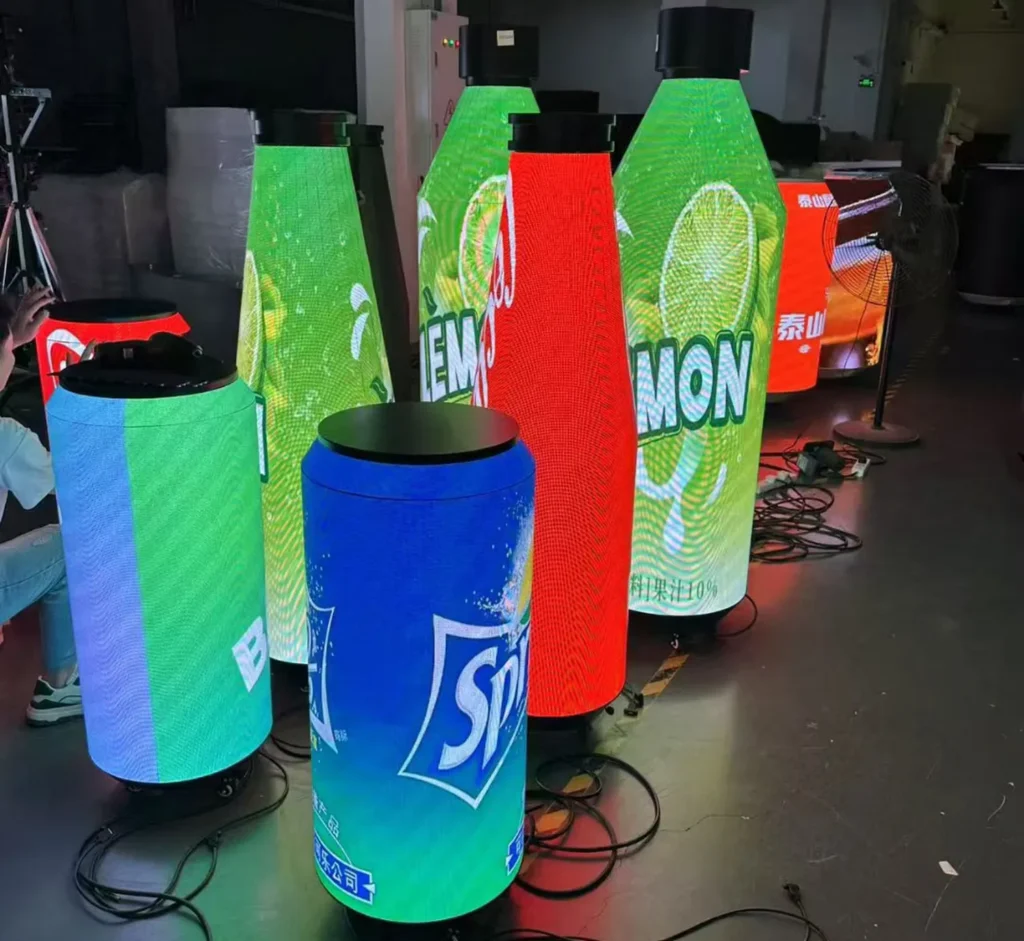
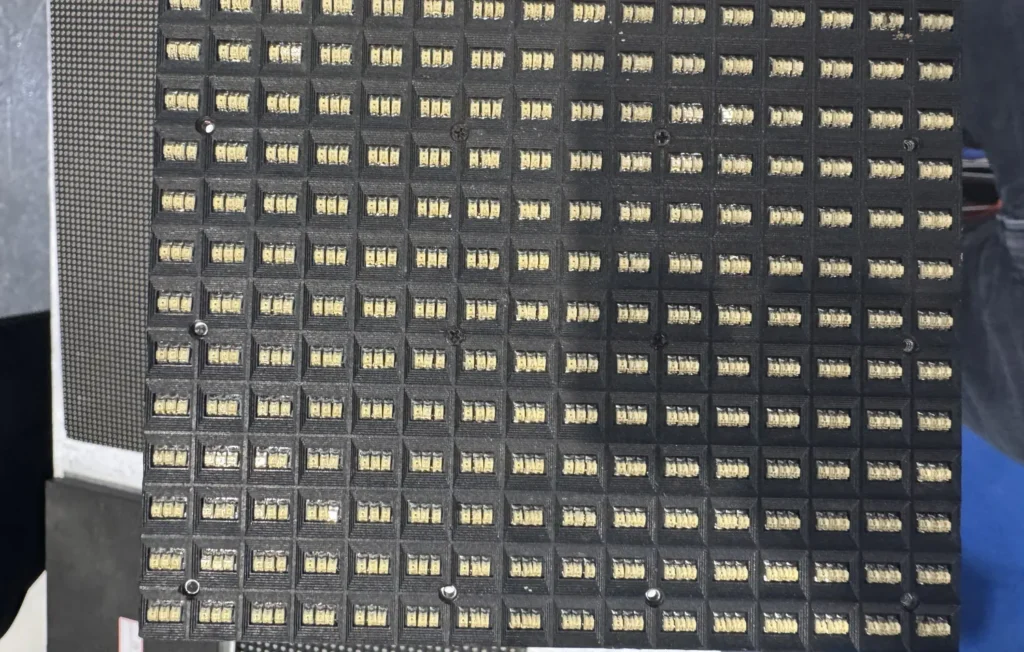
Creative led display is big category, normally as for most creative led display, it need to customized different shape or need a different function. Hence most creative led display are made by flexible led module. We Tepixel is passionate for the creative led display and has been in flexible led display business since 2012. Bottle shape led display, Cylinder led display, Round shape led display, Sphere led display is the best seller in creative led display. And we all have mature and many case to support any of your imagination into reality.